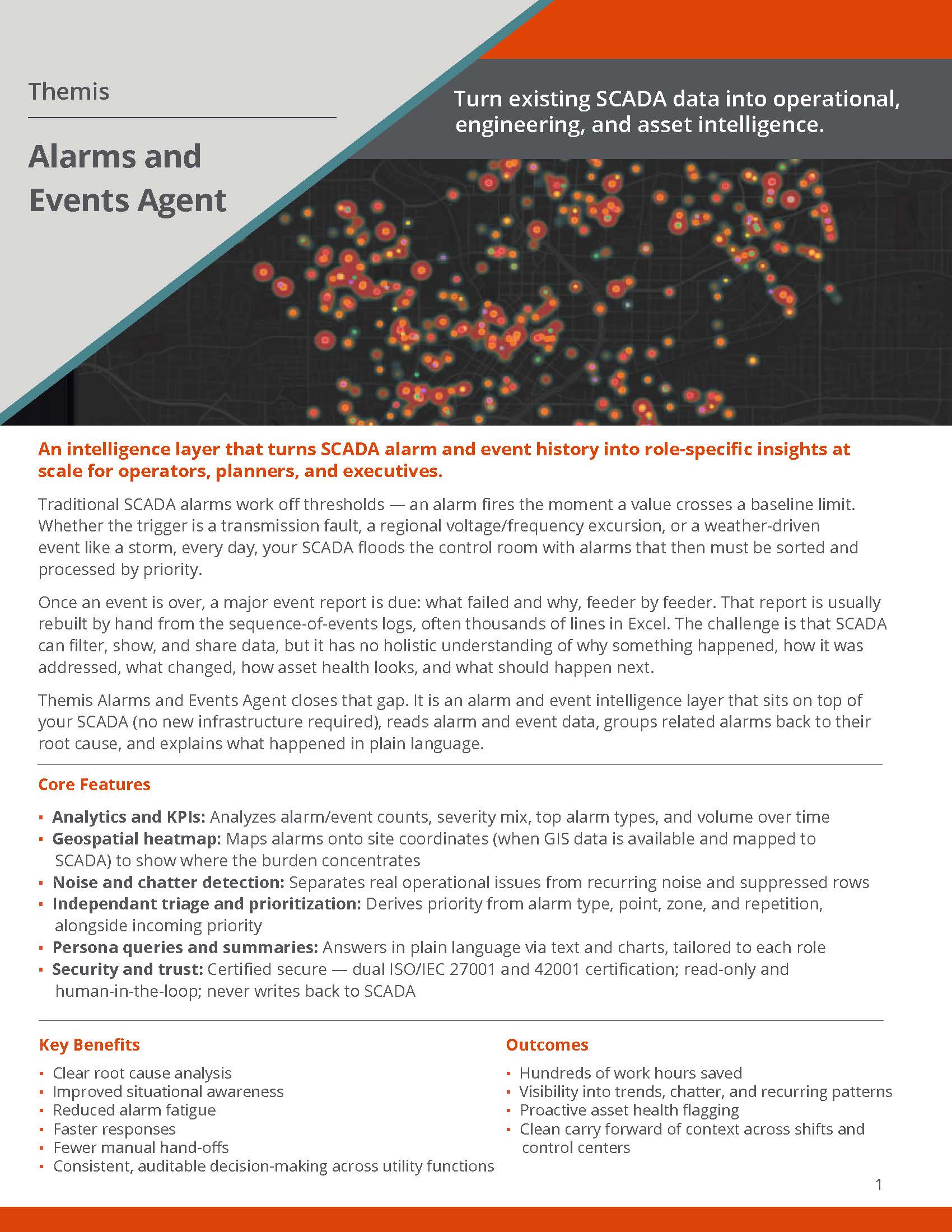
Themis Alarms and Events Agent
Turning SCADA history into operational, engineering, and asset intelligence
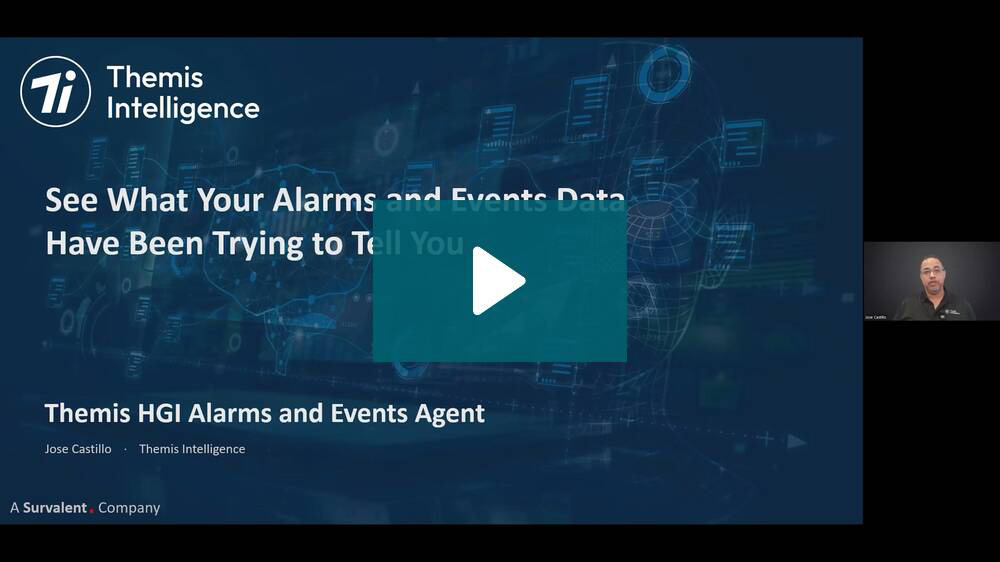
What Has Your Alarm and Event Data Been Trying to Tell You?
Alarm and event data is the most complete record of how your system actually behaves: how operators respond, if procedures hold up, where the grid is resilient and where it isn’t. But digging deeper than the live alarm page takes time and resources most teams don’t have. What trends, patterns, and process improvements are you missing?
Every day, your SCADA floods the control room with alarms, which are then processed by priority. While SCADA has many tools to filter, show, and share data, it is missing an understanding of what has happened at a holistic level: the insight into what happened and why, how it was addressed, what changed, how asset health looks, and what should happen next.
Themis Alarms and Events Agent: From Raw Logs to Actionable Intelligence
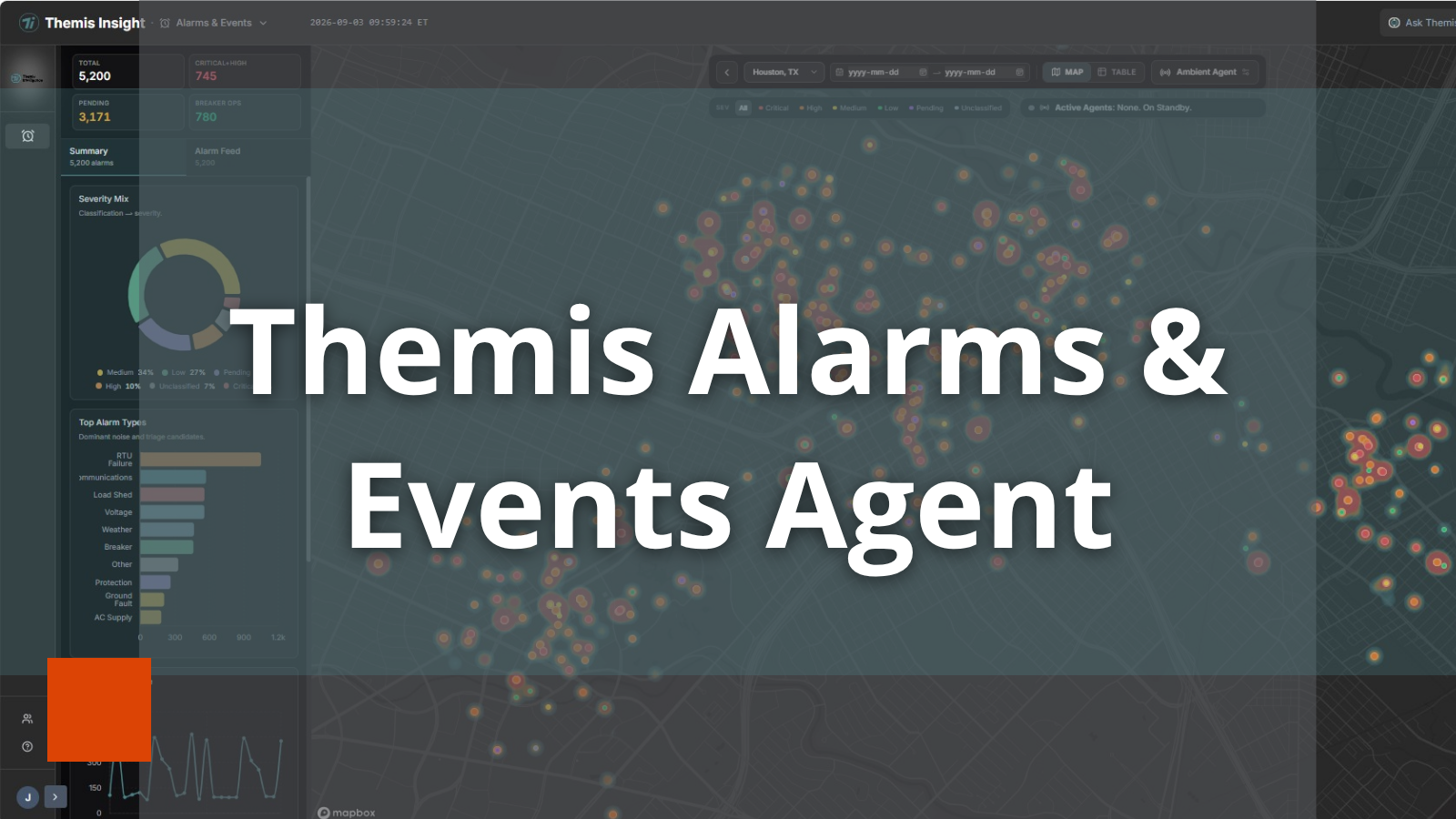
Themis Alarms and Events Agent is an alarm and event intelligence layer that sits on top of your SCADA, expanding alarm analysis and system management capabilities beyond the control room.
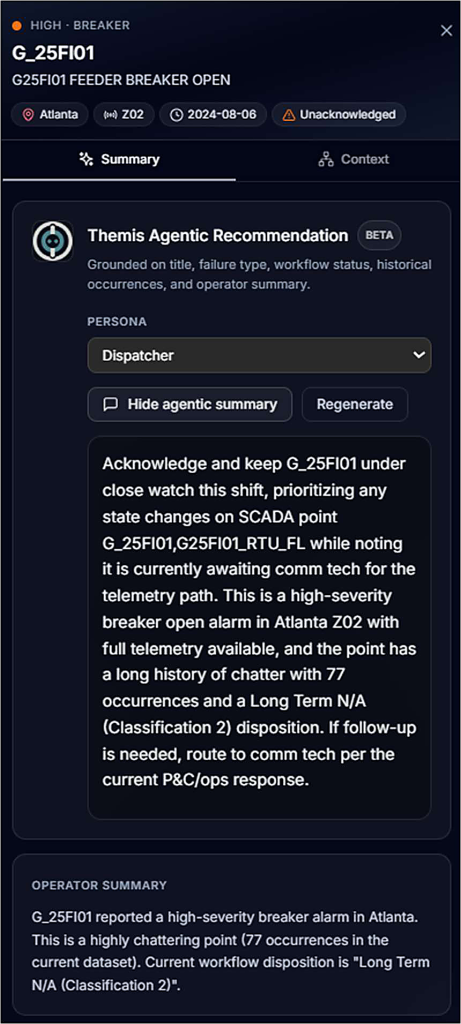
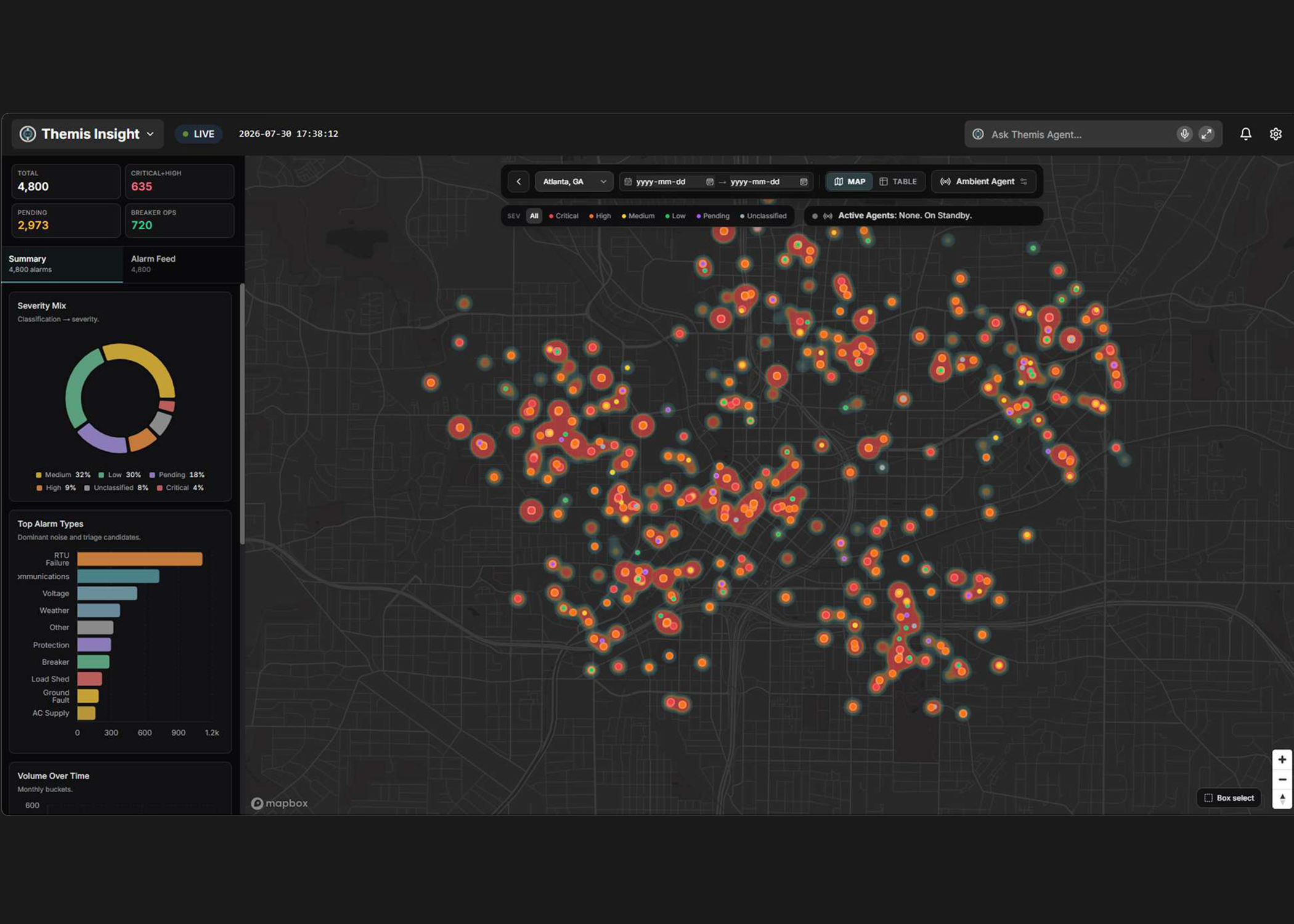
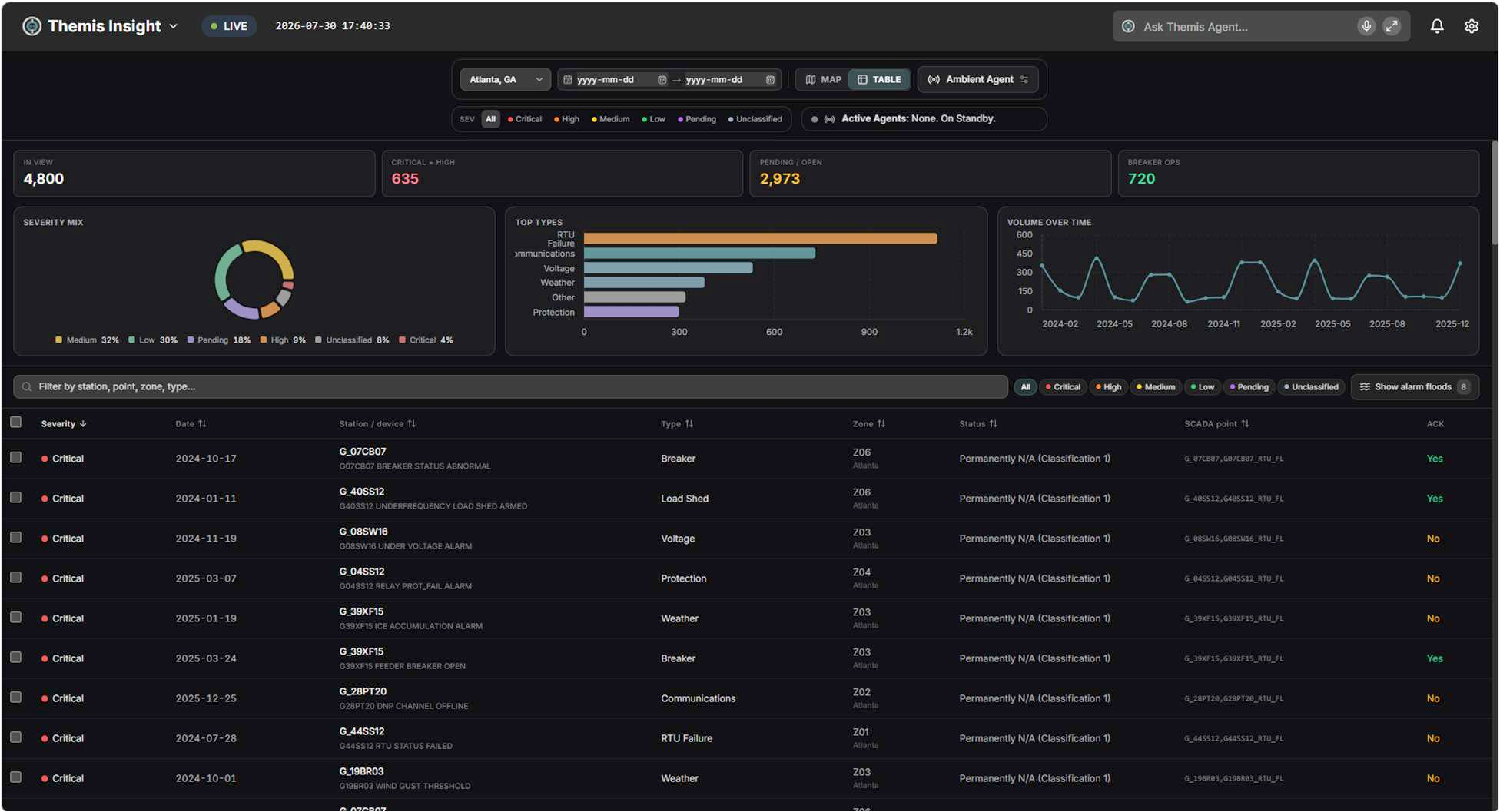
It reads your own history, groups related alarms back to their root cause, and explains what happened in plain language. Machine learning surfaces the patterns a simple count misses, and the agent reads those patterns against asset ratings and manufacturer limits to flag equipment drifting toward its edges.
Themis Alarms and Event Agent organizes and interprets alarm and event records by prioritizing and grouping alarms, filtering noise, highlighting critical conditions, maintaining device health/status context, and drafting summaries or work items for human review — changing workflows permanently while expanding what SCADA data can do across operations and the enterprise.
With Themis Alarms and Events Agent, a utility spanning several sites and control centers gets a single consistent view of alarms that can be regionalized or produced at enterprise scale: the same intelligence is adapted appropriately to serve the operator working a major event; the protection, control, planning, and engineering teams looking for recurring causes; and the managers and field crews who need a single clear version of an incident.
Outcomes
- Improved situational awareness
- Reduced alarm fatigue
- Faster responses
- Fewer manual hand-offs
- Consistent, auditable decision-making across utility functions